Nueva publicación divulgativa: Aves y control de plagas en pumaradas de sidra de Asturias

¡Phytoma se hace eco de nuestro trabajo y nos da su portada! En este artículo, actualizamos y resumimos todo nuestra investigación sobre aves insectívoras y control de plagas en el manzano de sidra de Asturias: qué aves son las más frecuentes, cuál es su efecto en el control biológico, quién se come a quién, de qué depende la diversidad de aves en las fincas,… y, lo más útil: qué pueden hacer los productores para fomentar la intensificación ecológica del control de plagas y cómo puede ayudarles la Administración. Todo ilustrado con fantásticas fotos y dibujos de cosecha propia.

La figura representa la aparición de distintos tipos de plagas consumidas por distintas especies de aves en las pumaradas, detectadas a partir de restos de ADN de los artrópodos extraídos de las muestras fecales de las aves (dibujo de Daniel Martínez; fuente García D et al. 2022 Phytoma 336:17-23).

New Publication: On-farm experiences shape farmer knowledge, perceptions of pollinators, and management practices

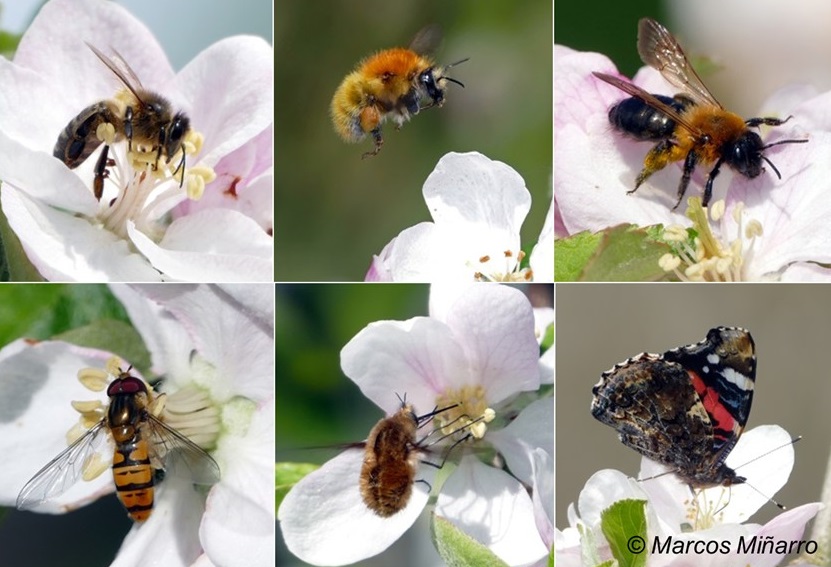
We collaborate with Julia Osterman and other colleagues to study how farmers value pollinators in different crops around the world. From more than 500 interviews across 11 countries, we found that bees (managed honeybees and bumblebees, and wild bees) are the most valued pollinators. Anyway, many farmers appreciate the additional role of non-bee pollinators in their crops. The perception of farmers of the importance of the different pollinator types is proportional to the actual abundance of each type in crops, this estimated from scientific surveys. Interestingly, the deeper the ecological knowledge among farmers, the stronger is their willingness to adopt measures for promoting pollinator biodiversity such as wildflower strips or hedgerows around their crops. This encourages us to keep on divulgation actions!! Read the open-access paper in Global Ecology and Conservation!

Bees (upper row: honeybee, bumblebee, solitary wild bee) and non-bees (lower row: hoverfly, bee-fly and butterfly) are perceived by farmers as relevant pollinators (pictures by Marcos Miñarro)

Oferta: Contrato Predoctoral en Proyecto BatBirdFruit

¿Quieres hacer la tesis doctoral estudiando los servicios y diservicios ecosistémicos de aves y murciélagos en agroecosistemas?

El Ministerio de Ciencia e Innovación de España oferta un contrato predoctoral asociado a BatBirdFruit, en su nueva convocatoria de Formación de Doctores de 2021. El plazo de presentación de solitudes es del 28 de octubre al 11 de noviembre de 2021.

Buscamos candidatos/as altamente motivados por la ecología aplicada, con buen bagaje en zoología de campo, ecología del paisaje, biología molecular y análisis de datos. Se requiere buen nivel de inglés y carné de conducir B1. Necesitas además estar en condiciones de matricularte en un Programa de Doctorado en el curso 2022-2023. Marcos Miñarro y Dani García serán los directores de la tesis.

La investigación de la tesis se centrará en determinar el papel de aves, murciélagos y arañas como predadores de plagas en manzano y arándano en Asturias, mediante una aproximación de ecología trófica y análisis de interacciones. También estudiaremos experimentalmente los efectos netos de aves y murciélagos en cultivos de arándano. Puedes acceder a un resumen del proyecto aquí.

¡Presenta tu candidatura directamente a través del portal del MICINN! Contáctanos si aún tienes dudas.

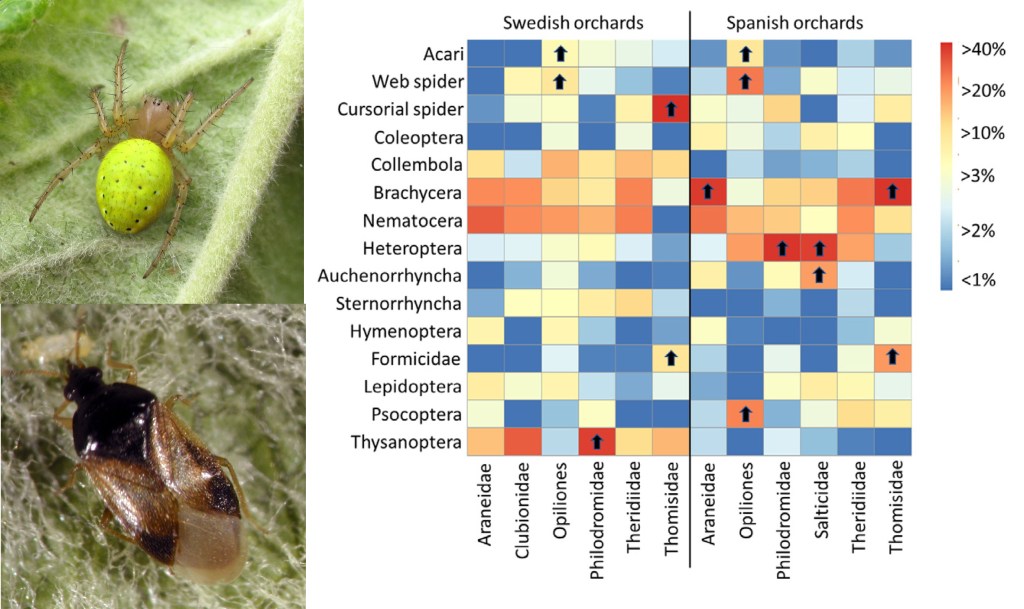
New Publication: Spiders prey on other natural enemies more than on pests

We collaborate with Peter Hämback and other colleagues to study the role of spiders as natural enemies of pests in apple orchards from Sweden and Spain. We used gut metabarcoding for identifying prey species. Most arachnids consume a large range of apple pest species but, surprisingly, also a high proportion of other natural enemies. In fact, a third of prey sequences in spider guts belonged to other predator species. In Spain, among these “preyed predators” were other spiders and mostly heteropteran bugs (mirids and anthocorids). Read the whole paper in Basic and Applied Ecology!

Pictures by Marcos Miñarro

New publications on biodiversity and apple pollination in Europe

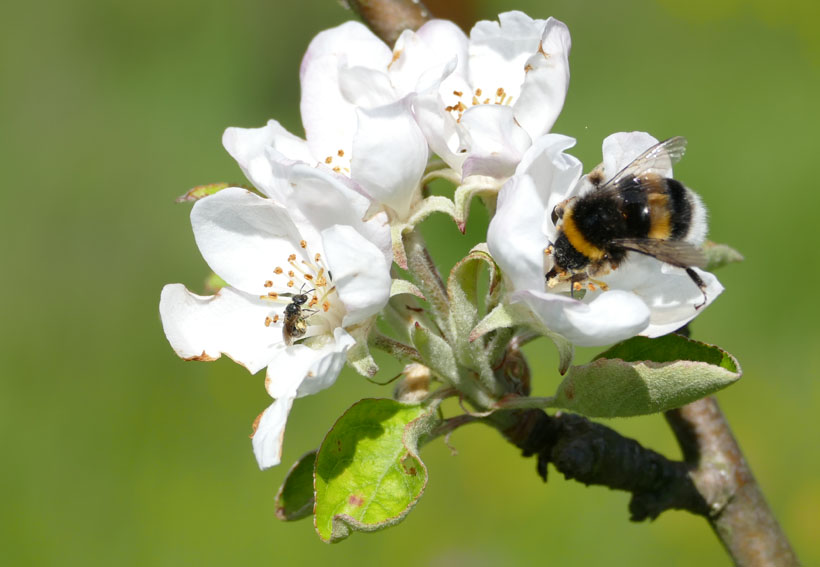
We participate in two large-scale studies on the relevance of pollinators in apple crops throughout Europe. On the one hand, by using trait-based estimates of functional diversity, we evidence the filtering effects of landscape homogenization and orchard intensification on pollinator biodiversity, but also the relevance of functional diversity on pollination service. Importantly, low-intensity orchards with high pollination functional diversity reach levels of pollination similar to those of high-intensity where pollinator assemblages are impoverished. See results in Journal of Applied Ecology. On the other hand, in Ecological Applications we show that pollination deficits are widespread across European orchards, highlighting the need of supporting abundant and diverse wild pollinator assemblages.

(c) Marcos Miñarro

New publication: Blueberry needs Bumblebees

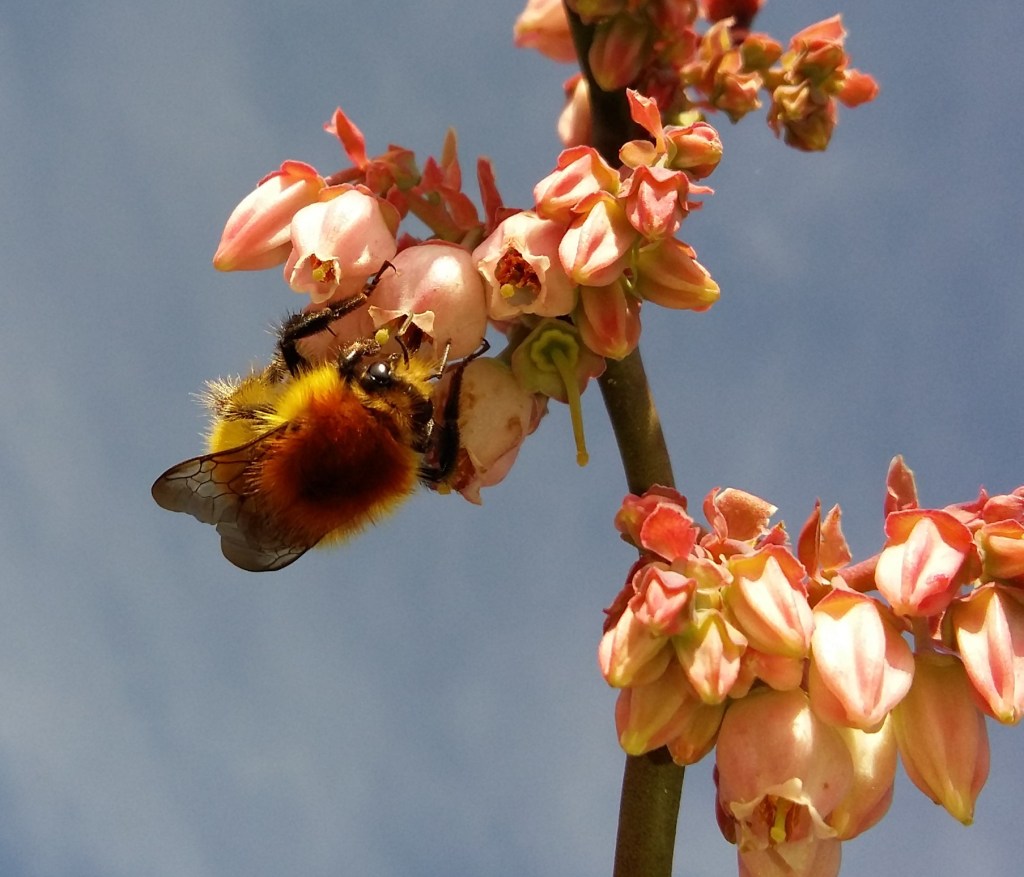
We demonstrate the relevance of wild native bulblebees as pollinators of American blueberry crops introduced in Asturias. By foraging at early dates of the blueberry blossom and under bad weather conditions, they provide pollination service highly complementary to that of managed honeybee. See the open access article at Insects!

(c) Marcos Miñarro